
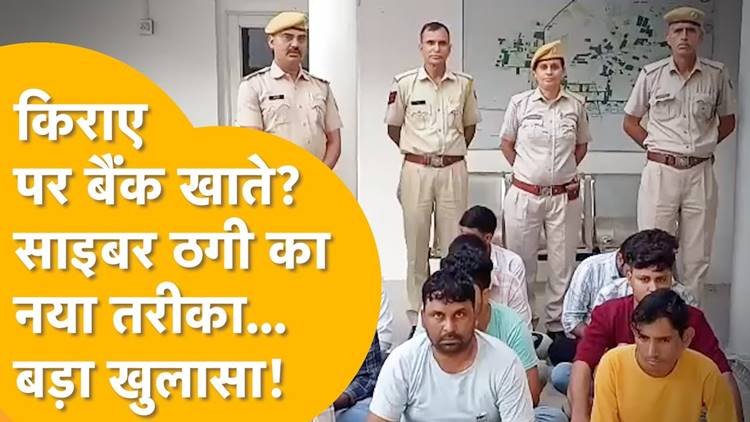
A major cyber fraud racket has been uncovered in Jhunjhunu, Rajasthan, shaking the district with its scale and reach. Police investigations revealed that more than 3,600 bank accounts were misused by online scammers. Shockingly, most of these accounts belonged to young people who, tempted by small sums of money, unknowingly jeopardized their futures.
Jhunjhunu cyber fraud case This incident highlights how quickly personal financial data can be exploited when individuals fall prey to cybercriminals. The police are now cracking down on the network while also focusing on public awareness campaigns to prevent such cases in the future.
Cybercrime by the Numbers
Information from the National Cyber Crime Reporting Portal revealed that suspicious activities were linked to over 3,600 accounts in Jhunjhunu. Several fraud-related complaints were directly connected to these accounts.
So far, police have arrested 33 people. Among them, 23 are aged between 19 and 30, a sign of how vulnerable young adults are to these fraudsters.
Also Read :





₹150 Crores Transacted in 18 Months
Investigators found that nearly ₹150 crores (1.5 billion) were funneled through these accounts over the past 18 months. This money originated from cyber scams carried out across the country.
Police have frozen around ₹70–75 crores, which will help compensate victims of the fraud.
The Role of “Mule Accounts”
At the center of this fraud are so-called mule accounts. Many youngsters rented or sold access to their bank accounts for as little as ₹5,000 a month. Once criminals gained control, these accounts became tools for:
- Direct cyber fraud – stolen money was routed through them.
- Fake investment apps – including bogus schemes like “US dollar trading.”
- Fraudulent gaming apps – such as Ludo-style apps used for scams.
In many cases, account holders even handed over their ATM cards, PINs, and online banking credentials, giving scammers complete control.
Accounts Misused Without Knowledge
Not every account holder knowingly participated. Sometimes accounts were hijacked through:
- Phone hacking: Scammers send malicious links, often as APK files via SMS or WhatsApp. Clicking them lets criminals steal banking details.
- Accidental misuse: Some people allowed one-time use of their accounts without realizing the money being transferred was stolen.
Still, police say many youths deliberately allowed misuse, seeing it as “easy money” — without realizing the severe legal and financial consequences.
Police Crackdown and Arrests
A special campaign was launched to track mule accounts. Police teams across Jhunjhunu carried out arrests as follows:
- Jhunjhunu Kotwali: 11 arrests
- Nawalgarh: 9 arrests
- Pacheri: 6 arrests
- Mandawa: 4 arrests
- Babai: 2 arrests
- Guda Gorji: 1 arrest
Investigators are analyzing bank statements to identify whether individuals were knowingly complicit. Innocent account holders are being educated on cyber safety, while offenders face strict legal action.
How to Stay Safe from Cyber Scams
Authorities are urging citizens — especially young people — to stay vigilant. Key safety steps include:
- Never share bank details like account numbers, ATM pins, or passwords.
- Avoid clicking suspicious links in messages or emails.
- Check account activity regularly and report unusual transactions.
- Be wary of “quick money” offers, as they are often scams.