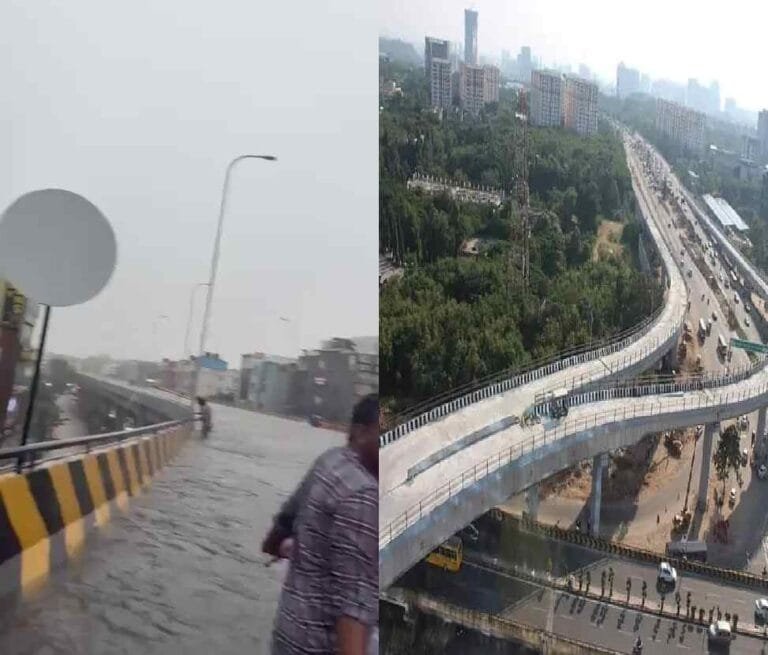
Hyderabad, India – Imagine driving up a city flyover expecting a smooth ride, only to find yourself wading through water like you’re crossing a river. That’s exactly what happened in Hyderabad recently when a major elevated road turned into what many are calling a “swimming pool” after a bout of moderate rain.
The flyover, built to reduce traffic jams and offer a faster commute, ended up causing chaos as videos and photos went viral showing cars and two-wheelers splashing through waterlogged lanes—on a road that’s supposed to be high and dry. In some clips, vehicles are seen almost halfway submerged, struggling to move forward.
“It was just shocking,” said Rakesh Kumar, a regular commuter caught in the mess. “You expect waterlogging on city roads, not on a flyover. It felt like we were driving through a canal, not an elevated structure.”
The core function of a flyover is to offer uninterrupted traffic flow and protection from issues like street-level waterlogging. But this unexpected flooding has triggered serious concerns about how the structure was designed, constructed, and maintained.
Also Read :


A flyover in Hyderabad has turned into a swimming pool itself. How on earth does an elevated road flood?
— THE SKIN DOCTOR (@theskindoctor13) July 19, 2025
Anyway, while we’re at it, why not just block traffic on this engineering marvel and let kids use it for swimming until the monsoon ends? pic.twitter.com/wK6NL52IQo
So, how does a flyover even flood?
Experts and observers have suggested several possible reasons:
- Faulty Drainage System: The most likely reason is poor or blocked drainage on the flyover. There may not be enough drain inlets, or they could be clogged with silt, garbage, and plastic waste.
- Wrong Road Slope: If the flyover wasn’t built with a proper slope or gradient, water can’t flow off efficiently, leading to accumulation.
- Blocked Outfall Points: Even if the flyover drains are working, the exit points where the water is supposed to go could be blocked—causing water to back up.
- Substandard Construction: If low-quality materials or bad practices were used during construction, the drainage system might have failed sooner than expected.
City authorities have responded to the viral outrage. The Greater Hyderabad Municipal Corporation (GHMC) confirmed that an investigation is underway. “We’re taking this matter very seriously,” a GHMC spokesperson stated. “Our teams are already assessing the drainage issue on site, and immediate action will be taken.”
This incident highlights the urgent need for better planning, construction, and regular maintenance of urban infrastructure—especially in a city like Hyderabad that faces frequent monsoon rains. With the city expanding and more flyovers coming up, officials must ensure that such elevated roads are equipped to handle heavy downpours.
Until then, commuters are left to wonder how a structure built to rise above such problems ended up drowning in them. Hopefully, this serves as a wake-up call, not just for Hyderabad, but for urban planning bodies across the country.