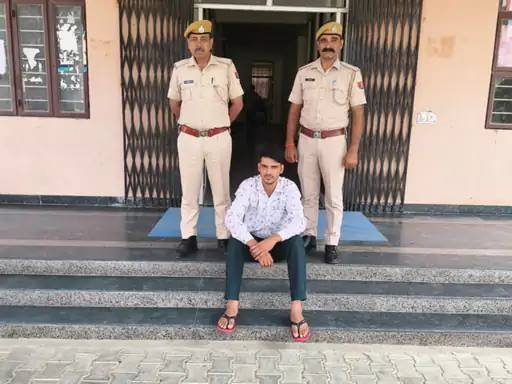
Jhunjhunu, Rajasthan. A wave of sorrow has swept through Raghunathpura village after the tragic death of a young woman that authorities now suspect to be a case of abetment of suicide. In a prompt and determined move, Jhunjhunu Police have arrested the deceased’s boyfriend, Ashok Kumar, on serious charges of driving the victim to take her own life.
The incident has once again brought to light the dark side of emotional manipulation and mental abuse in relationships, sparking outrage and concern across the district.
The Incident and Police Response
Jhunjhunu suicide case The case came to light when the victim, identified as Nikita Kumari, was found dead at her residence under suspicious circumstances. What initially seemed like a personal tragedy soon took a legal turn when her family lodged a complaint alleging that continuous emotional harassment and mental torture by Ashok Kumar had pushed Nikita to end her life.
Acting swiftly on the complaint, the Jhunjhunu Police launched an intensive investigation. Through technical surveillance and local intelligence, they traced the accused’s whereabouts and successfully apprehended Ashok Kumar from the Raghunathpura area.
Also Read :





The speed of the arrest — described by officials as “swift action” — not only prevented the suspect from absconding but also ensured that crucial evidence remained secure. Police officials said that such timely intervention is vital in cases where digital and witness-based evidence can quickly be tampered with.
Legal Context: IPC Section 306 — Abetment of Suicide
Ashok Kumar has been booked under Section 306 of the Indian Penal Code (IPC), which pertains to abetment of suicide. Though not equivalent to a murder charge, it carries a significant penalty — imprisonment of up to 10 years along with a fine — recognizing the gravity of causing psychological harm leading to suicide.
Legal experts note that for a conviction under this section, the prosecution must prove that the accused deliberately provoked, coerced, or aided the victim in taking the extreme step. The investigation will focus on gathering:
- Electronic Evidence: Call logs, chats, and social media records between the accused and the victim that could reveal threats, coercion, or sustained harassment.
- Witness Statements: Accounts from friends, relatives, or neighbors who may have observed tension or conflict in the relationship.
- Forensic and Postmortem Reports: To verify the cause and time of death and ensure that all physical evidence aligns with the timeline of alleged harassment.
The fact that the police identified Ashok Kumar as the “main accused” so early suggests they already have strong preliminary evidence, possibly including digital communication or testimony from the victim’s close circle.
Emotional Abuse — A Growing Social Concern
This incident in Jhunjhunu underscores a disturbing social pattern — the rise in suicides linked to relationship-related distress and emotional abuse. Experts warn that mental and emotional manipulation can be as destructive as physical violence, often leaving invisible scars that lead to tragic consequences.
In this case, Nikita’s family has categorically denied that depression or personal stress alone caused her death. They insist that the continued harassment and humiliation by the accused directly drove her to this extreme act. Their courage in filing the complaint and seeking justice has ensured that the issue is treated not merely as a suicide, but as a crime rooted in psychological abuse.
Social activists have also highlighted how women in unequal or abusive relationships often suffer in silence due to societal pressure or fear of stigma. They argue that such cases must push both society and the legal system to take mental and emotional abuse more seriously.
The Road Ahead: Investigation and Court Proceedings
Following his arrest, Ashok Kumar is in police custody and being interrogated. Investigators are analyzing his phone records and other electronic devices to piece together a full picture of events leading up to Nikita’s death.
Once the initial investigation is complete, police plan to produce the accused before a magistrate and are expected to seek judicial custody, given the seriousness of the charges and the possibility of witness tampering.
The local community of Raghunathpura remains deeply shaken. Many residents, particularly women’s groups, have voiced solidarity with the victim’s family and demanded strict punishment if the allegations are proven true.
Meanwhile, mental health professionals are urging greater public awareness about emotional abuse and the importance of early intervention in toxic relationships.
Justice and Reflection
While no legal action can undo the loss suffered by Nikita’s family, this case represents an important moment for both law enforcement and society. The Jhunjhunu Police’s swift response has been widely appreciated, but justice will ultimately depend on the court’s careful evaluation of evidence and witness testimony.
Raghunathpura’s tragedy serves as a grim reminder that emotional violence is real — and its consequences can be just as devastating as physical harm. For now, the community awaits a fair and thorough judicial process that can offer the bereaved family a measure of closure and reaffirm society’s stand against psychological abuse.