What began as a well-intentioned effort by the Rajasthan government to support women’s health and dignity is now falling apart — quite literally. The initiative aimed at providing sanitary napkins through vending machines in public toilets was supposed to be a step forward in easing women’s lives, especially during travel. But on the ground, the picture looks very different.
A recent visit to public facilities in Jhunjhunu revealed that these machines are broken, neglected, and gathering dust. The situation raises serious concerns about maintenance, accountability, and the real impact of government schemes that sound promising but fail in execution.
Good Intentions, Poor Execution
The state had launched this plan with a clear goal — to ensure that women, especially while on the move, would not have to face discomfort during their periods. Sanitary pad vending machines were installed in air-conditioned public toilets at places like bus stands and busy public areas. It was meant to show sensitivity toward women’s hygiene needs and offer practical help.
At first glance, the initiative appeared modern, progressive, and respectful of women’s health needs. But things look very different when you step inside these facilities.
Also Read :





Jhunjhunu Bus Stand: Ground Reality Hits Hard
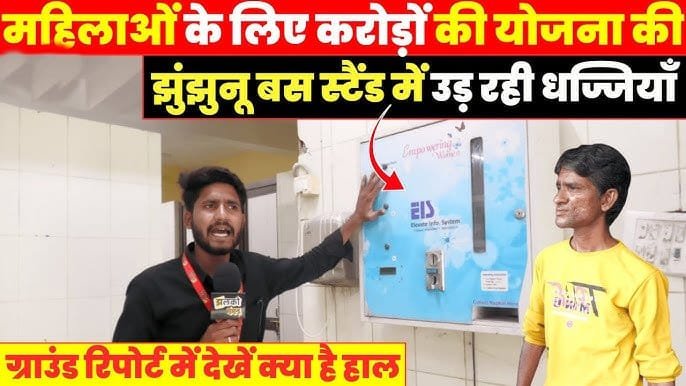
The women’s public toilet at Jhunjhunu bus stand had all the signs of a planned and inaugurated facility — a big signboard, details of when it was opened, and by whom. But inside, the sanitary napkin vending machine is completely non-functional. In fact, it’s been out of order for over a year.
The machine now stands like a useless box — covered in dust, surrounded by cobwebs, and ignored by authorities. A female staff member posted there for the past 15–20 days confirmed the machine hasn’t worked during her time. She also pointed out another major issue — no water in the toilet.
No Water, No Dignity
A toilet without water isn’t just a failed facility — it’s a health hazard and a direct blow to women’s comfort and hygiene. With no water and no access to sanitary pads, the toilet becomes almost unusable for its intended purpose. For women in need, especially during menstruation, this is more than just an inconvenience — it’s a serious problem.
Second Location: Nagar Parishad Toilet
Hoping for better conditions, the reporting team visited another public toilet — this one near the Nagar Parishad (Municipal Council) office. It was air-conditioned, well-maintained, and surprisingly clean — probably the cleanest public toilet in town.
However, even here, the sanitary napkin vending machine was broken.
So despite better cleanliness, the core purpose of the facility — providing quick access to sanitary pads — was still not fulfilled.
Two locations. Same problem. This points to something deeper than just a few broken machines.
Wider Failures: The Indira Mahila Shakti Udaan Yojana
The issue isn’t limited to a couple of toilets. Another major scheme, the Indira Mahila Shakti Udaan Yojana, aimed to distribute sanitary napkins in Anganwadi centres and schools across Rajasthan. That program too has reportedly come to a standstill — inactive for over a year.
Broken machines, unfinished projects This means thousands of girls and women are left without access to affordable or free sanitary pads. These failures show that while schemes may be launched with good intentions, their sustainability and effectiveness are sorely lacking.
Why Are These Schemes Failing?
A closer look reveals several core problems:
- No maintenance: Machines are installed but never repaired once they break down. The bus stand machine has been non-functional for more than 12 months.
- No accountability: Local bodies like the Nagar Parishad are responsible for upkeep, but there is no oversight or follow-up.
- Wasted taxpayer money: Lakhs of rupees go into installing these machines and setting up facilities — but if they don’t work, it’s all for nothing.
- Disrespect to women: These schemes were meant to support women during their periods. When they fail, they send the opposite message — one of neglect and apathy.
The Real Impact on Women
These failures aren’t just about broken machines or dirty restrooms. They have real, everyday consequences for women:
- Pads are expensive: Many women, especially from poor households, cannot afford sanitary napkins regularly.
- Health risks: In the absence of proper sanitary products, women may resort to unsafe alternatives, leading to infections and serious health issues.
- Shame and discomfort: Unexpected periods while traveling can be distressing. These machines were supposed to offer quick relief — instead, they cause more stress.
- Loss of trust: When women see that government promises aren’t kept, it breaks their trust in public systems. What good is a scheme if it doesn’t work when you need it?
What Needs to Change
Clearly, launching a scheme is not enough — it must also function, and consistently so.
- Regular inspections: Authorities must check public facilities regularly to ensure cleanliness and functionality.
- Timely repairs: A machine lying broken for a year is unacceptable. There needs to be a system for quick repairs.
- Dedicated maintenance funds: A portion of the budget should be allocated for ongoing maintenance — not just one-time installation.
- Accountability for local bodies: Institutions like Nagar Parishad must be held responsible if they neglect their duties.
- Clear complaint channels: Women should know who to contact when facilities don’t work.